-600x900.png "Intelligence in Danger of Death")
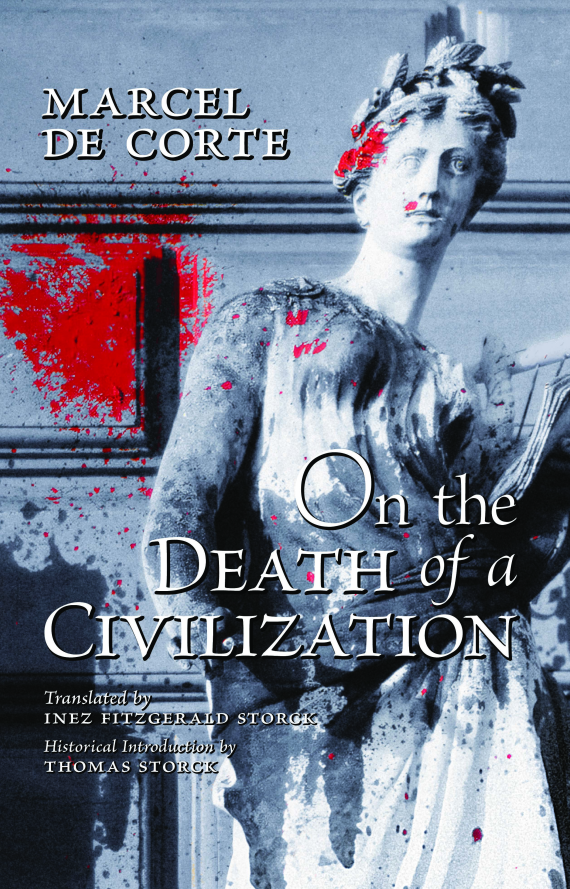
On the Death of a Civilization...
✦ ✦ A Catholic diagnosis of modernity On the Death of a Civilization Marcel De Corte...
View Book →


by Marcel De Corte · Translated by Brian Welter · Introduction by Miguel Ayuso, Ph.D.
A prophetic Thomistic analysis of modern man, propaganda, utopia, false information, and the crisis of intelligence in a world increasingly cut off from reality.
First English translation. Originally published in 1969 and subsequent editions in 1987 & 2017. Originally published in French in 1969, Intelligence in Danger of Death by the Belgian Catholic philosopher Marcel De Corte demonstrates that his analysis, prophetic in many respects, has lost nothing of its attraction because what it describes corresponds so closely to our contemporary society.
To grasp the profound mutation which man and society have undergone, Marcel De Corte offers a merciless analysis that relies on classical philosophy and insight from Christian Revelation. He outlines the genealogy of contemporary evils and indicates the ways to correct these. What Orwell and Huxley turned into novels, Marcel De Corte predicted through reasoning and analysis in the light of Wisdom.
Thomistic Realism
De Corte judges modernity in light of the real, not in light of ideology, image, or abstraction.
The Rule of Images
The modern mind is trained to live by appearance, propaganda, spectacle, and manufactured opinion.
The Crisis of Man
The book examines a civilizational mutation in which man becomes uprooted from nature, truth, and God.
“Intelligence is in danger of dying.”
Chapter 1
Intellectuals and Utopia
Chapter 2
The Romanticism of Science
Chapter 3
Information that Deforms
With a translator’s foreword, an introduction by Miguel Ayuso, the author’s original 1969 preface, and his 1987 preface, this edition presents De Corte’s analysis in its full intellectual and historical force.
Reality
The submission of intelligence to what is.
Utopia
The dream-world built when intelligence rejects reality.
Information
Not neutral data, but a force that can form—or deform—the soul.
Modernity
A revolt against nature, order, tradition, and the Principle of reality.
Dissociety
The unraveling of organic human bonds into collective abstraction.
Wisdom
The return to classical philosophy and Christian Revelation.
De Corte’s argument is not merely political, sociological, or cultural. It is metaphysical. He asks what happens when intelligence no longer receives reality, when images replace things, when information becomes formation, and when modern man begins to live inside a manufactured world.
This is a demanding book, but also an urgent one: a work for readers who want to understand not only the crisis around them, but the deeper intellectual wound beneath it.
Read Stuart Chessman’s review of Intelligence in Danger of Death at the Society of St. Hugh of Cluny.
A guide through Marcel De Corte’s profound diagnosis of the modern crisis of intelligence: from utopian intellectuals, to the romanticism of science, to information that deforms.
vii
Publisher’s Note
xi
Translator’s Foreword
xix
Introduction
Miguel Ayuso, Ph.D.
xxxv
Preface for the First Edition
1969
xlvi
Preface for the Second Edition
1987
Chapter 1
page 3
Chapter 2
page 67
Chapter 3
page 146
Three great movements of deformation: the intellectual cut off from reality, science romanticized into salvation, and information transformed into manipulation.
216
Conclusion
245
Index of Names
249
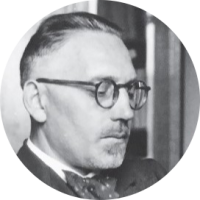
About the Author
A profound and prophetic work by Marcel De Corte, praised by leading Catholic thinkers for its perennial philosophical insight, its critique of modern ideologies, and its astonishing relevance to the present crisis.
De Corte is one of the greatest contemporary Catholic philosophers. It was above all in studying Aristotle that he became convinced that [Aristotle and Aquinas] used identical intellectual processes, and that they were, and are, among the best philosophers in history. This was enough for De Corte to oppose modern ideologies with the perennial relevance of classical philosophy.
—Danilo Castellano
Author of L’aristotelismo cristiano di Marcel De Corte
“I have loved justice and hated iniquity; that is why I die in exile.” These are said to have been the last words of Pope St. Gregory VII. Those of Marcel de Corte could have been analogous: “I have seen through the grotesque intellectual frauds around me; I have made due distinctions; but I lived in times when the difficult judgments men must make regarding complex issues has been used to block the knowledge of my work; therefore I die unappreciated.”
This translation will go a long way towards awakening thinking English-speaking Catholics to the recognition he so deserves.
—John C. Rao
De Corte’s analyses of the way in which a whole society can be made to believe a made-up story useful only to those who govern have been vindicated time and again since 1969; consider recent events such as a man-made virus and its made-up cure(s), made-up sexual categories, made-up universes in electronic media, transhumanism, and so on.
De Corte could not have known of these, but the principles he outlines make sense of them, and his reliance on a vast body of philosophical, political, and literary markers from the eighteenth to the twentieth century show the near-irresistible momentum that has led us to this point.
This book is an essential read for whoever wishes to understand the road that has led to the current epistemological crisis and its underpinnings; it is a red-pill time capsule. For the solution is precisely to see reality as it is, and to abandon the sophistries and fairy-tales that are imposed upon us.
—Peter A. Kwasniewski
A work of philosophical realism for readers seeking to understand propaganda, modern ideology, the crisis of intelligence, and the urgent need to recover reality.
Be the first to write a review for this product.
✦ ✦ A Catholic diagnosis of modernity On the Death of a Civilization Marcel De Corte...
View Book →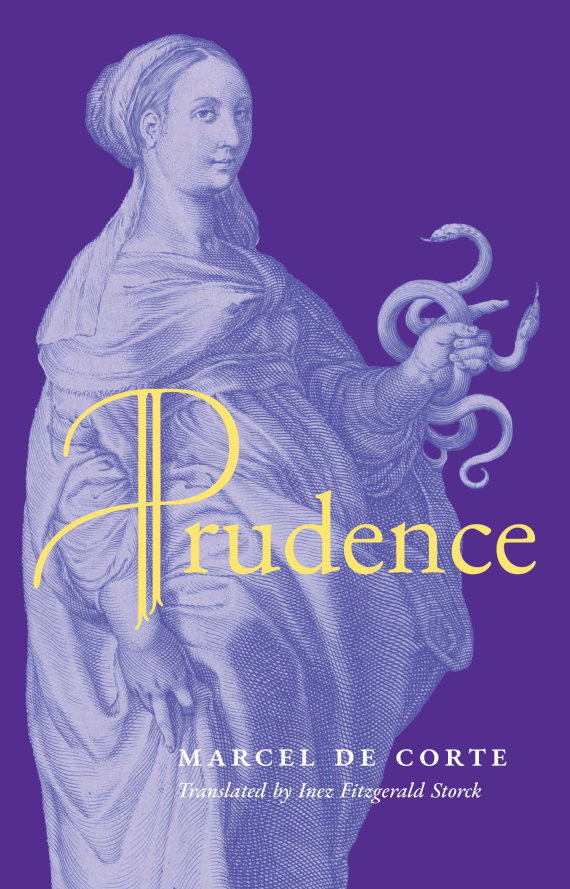
We are made to be happy, to experience eternal beatitude, the face-to-face vision of God. And we attain to this happines...
View Book →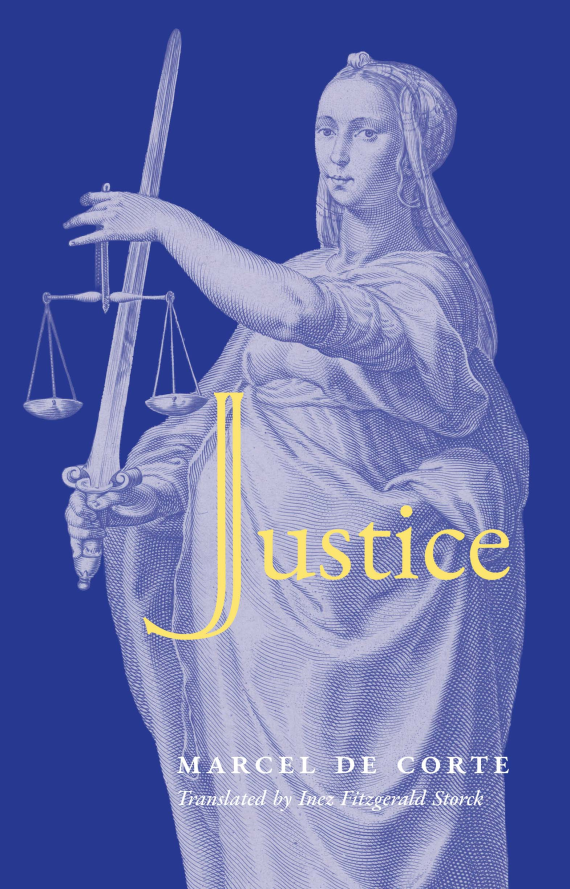
Today's world is rocked by claims and counter-claims made by the most diverse groups. The result is ideological conflict...
View Book →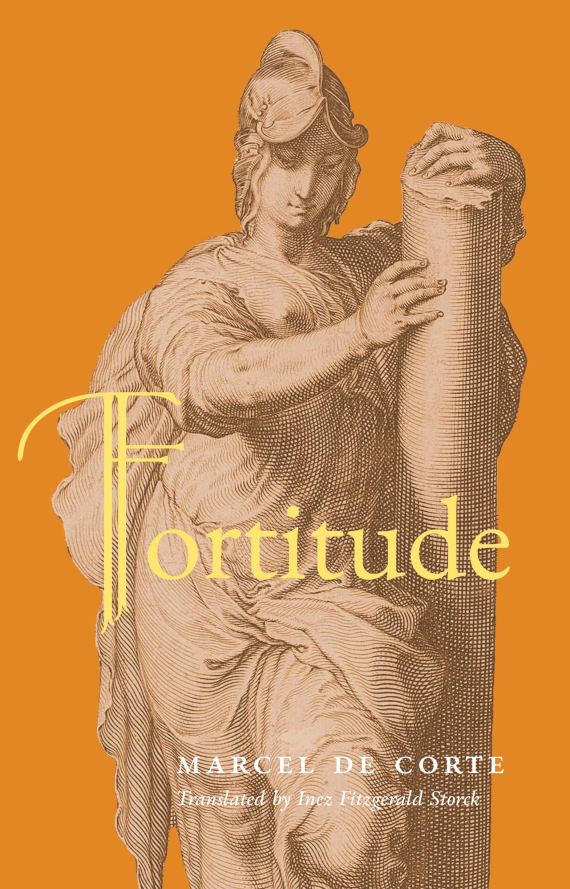
Insofar as the four cardinal virtues, prudence, justice, fortitude, and temperance, are remembered today, it is in a dis...
View Book →
Temperance has faded from modern consciousness as a virtue, relegated, when it is mentioned at all, to moderation in foo...
View Book →
✦ ✦ ✦ Michael Davies The Great Defender of Catholic Tradition by Leo Darroch · Foreword by Adrian Davies &nb...
View Book →
✠ ✠ Marcel De Corte The Four Cardinal Virtues Prudence · Justice · Fortitude · Temperance A...
View Book →
Receive updates on new releases, special offers, and notable developments from Arouca Press.